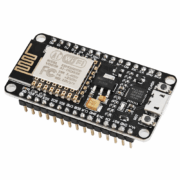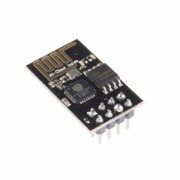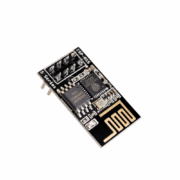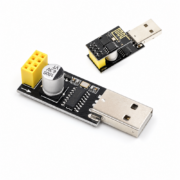
Description
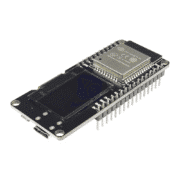
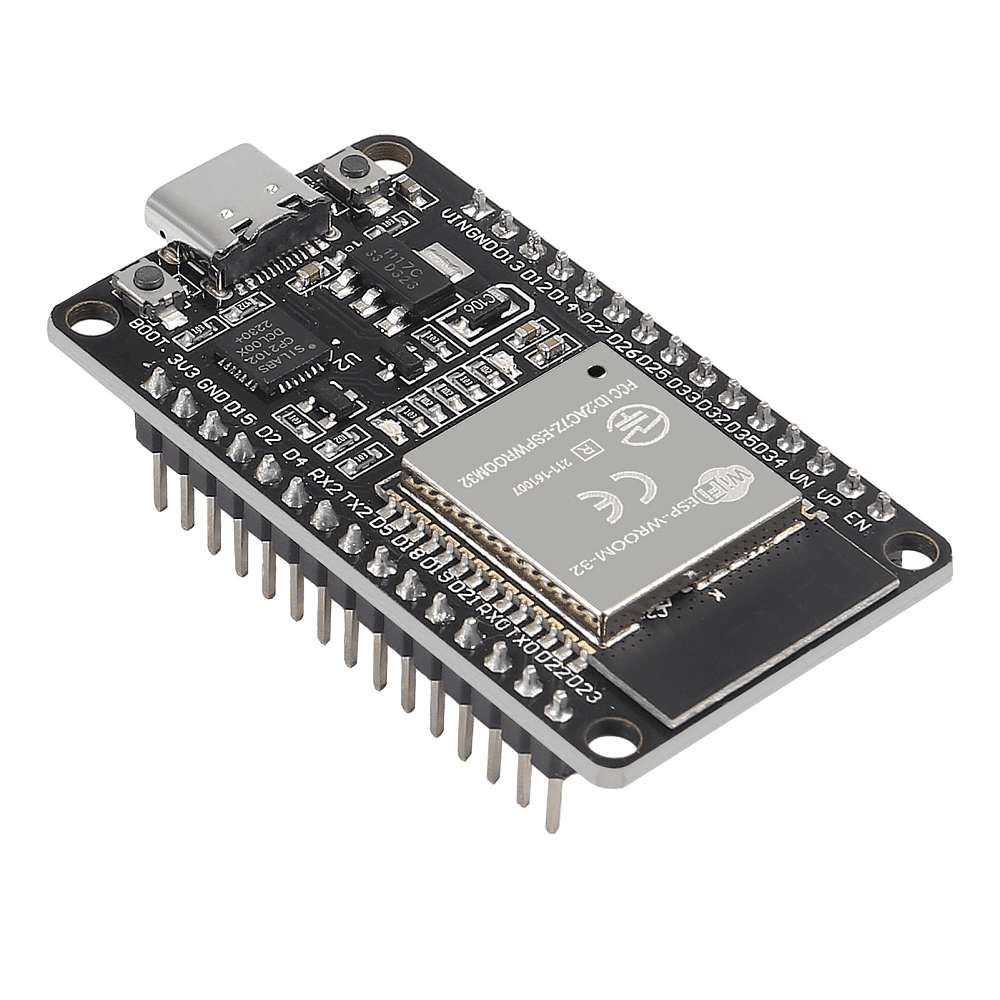
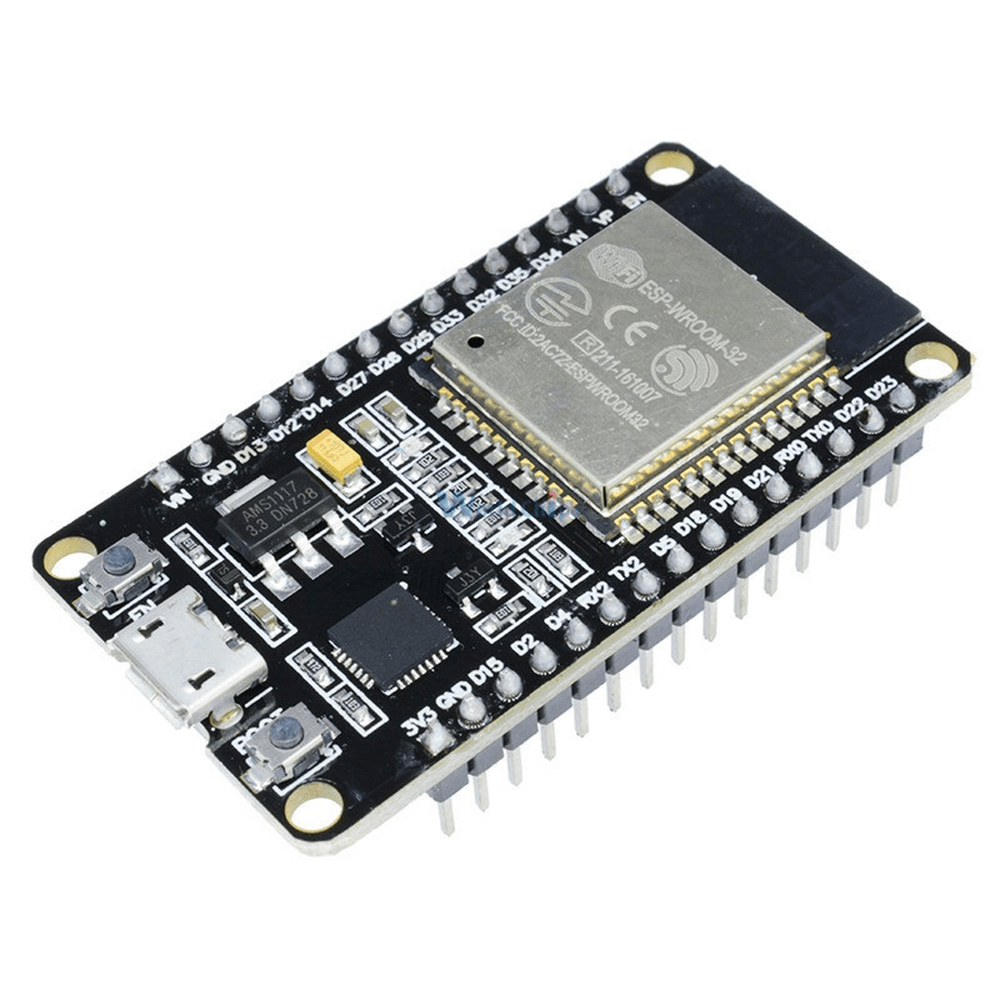
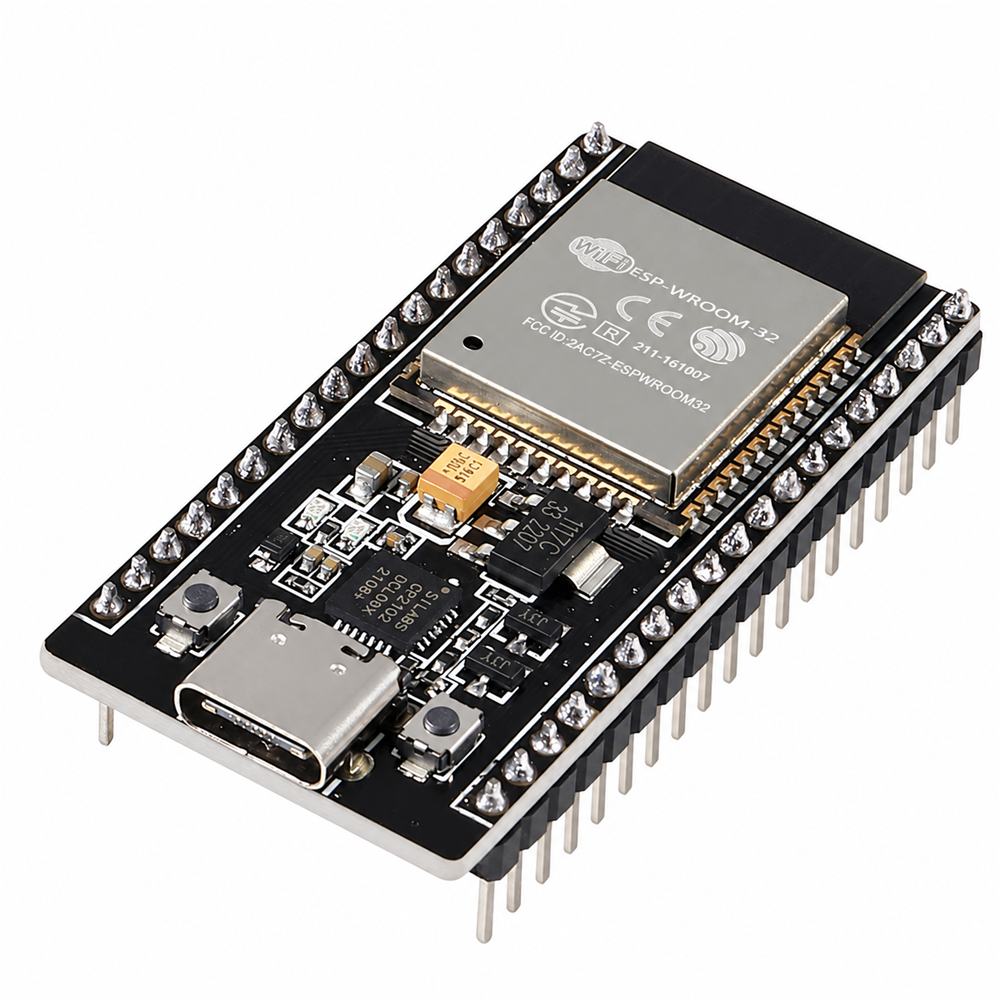
ESP-32S Dual-Core Wi-Fi and Bluetooth Module
The ESP-32S is a low-cost, low-power system-on-chip module with dual-mode Wi-Fi and Bluetooth. This listing describes a dual-core 32-bit Xtensa LX6 version for IoT and connected projects.
Highlights
- Compact module with high performance for its size
- Supports LWIP and FreeRTOS
- Wi-Fi modes: AP, STA and AP + STA
- Lua support is listed
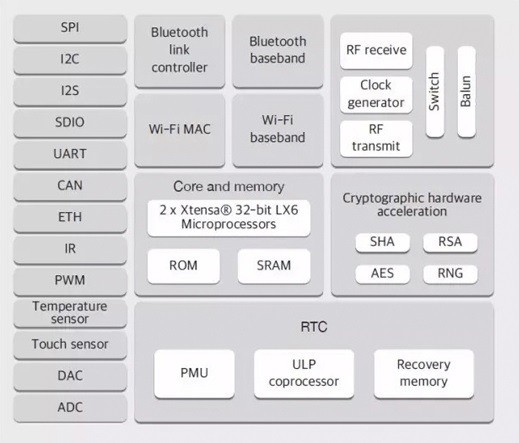
CPU and memory
- Dual-core 32-bit Xtensa LX6, up to 600 DMIPS (source listing)
- 448 KB ROM
- 520 KB SRAM
- 16 KB SRAM in RTC
- QSPI flash/SRAM, listed up to 4 × 16 MB
- Supply range listed: 2.2–3.6 V
Peripherals and interfaces
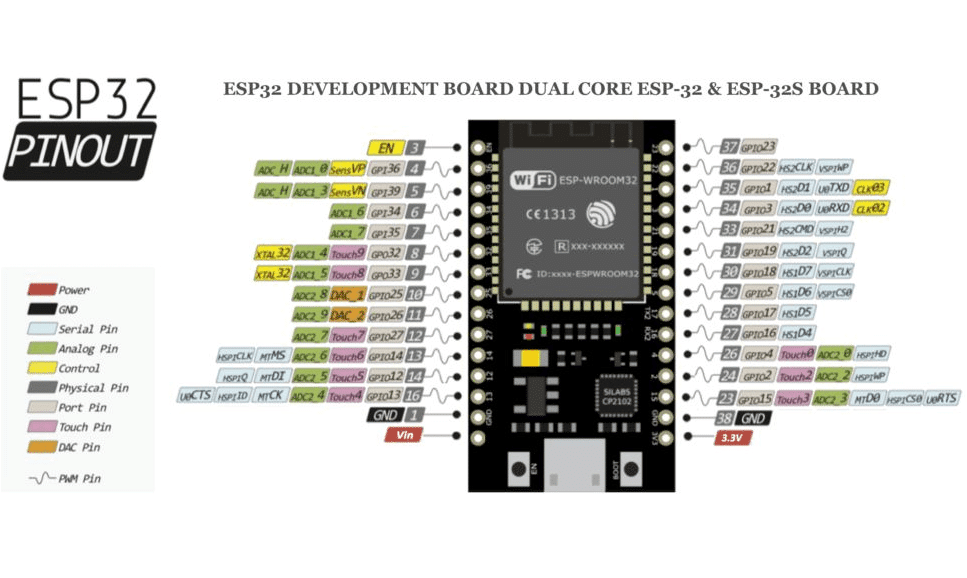
- Two 8-channel, 12-bit ADCs
- Two 8-bit DACs
- 16 PWM channels, 16-bit resolution
- Three 16-bit motor-control PWM channels
- Three UARTs (two with flow control)
- Two I2C interfaces, usable as host or device
- Two I2S interfaces
- Three SPI interfaces supporting host and device modes
- Eight IR transmit/receive channels
- 10 GPIOs compatible with capacitive touch
- SD/SDIO/MMC host controller (SD 3.01); SDIO device controller (SD 2.0)
- JTAG interface; MAC address and Ethernet controller interface
- 21 GPIOs operating at 3.3 V; the source notes no official 5 V compatibility
Clocks and timers
- Calibrated 8 MHz internal oscillator and calibrated internal RC oscillator
- External crystal oscillator: 2–40 MHz; 32 kHz RTC crystal oscillator with calibration
- Two timer groups, each with two 64-bit timers and a main watchdog
- RTC timer (sub-second precision listed) and RTC watchdog
Wi-Fi
Listed standards include 802.11 b/g/n/e/i, with 2.4 GHz 802.11n up to 150 Mbit/s. The feature list also includes QoS, WMM-PS, UAPSD, MPDU/A-MSDU aggregation, Block ACK, fragmentation and defragmentation, beacon monitoring/scanning, 802.11i security, WPA/WPA2/WPA2-Enterprise/WPS, infrastructure station and SoftAP modes, Wi-Fi Direct (P2P) and antenna diversity/selection.
Bluetooth
Bluetooth 4.2 BR/EDR and BLE are listed, along with adaptive frequency hopping, SDIO/SPI/UART host interfaces, UART up to 4 Mbit/s, controller and host stack, SDP, GAP, SMP, ATT/GATT, HID, BLE beacon, A2DP/AVRCP/SPP, HSP/HFP and RFCOMM. Audio codecs listed: CVSD and SBC. Piconet and scatternet are listed.
Applications and development
Use cases listed include low-power IoT sensor hubs and data loggers, camera streaming, OTT devices, internet audio players, Wi-Fi toys, voice-recognition devices, headsets, home automation, mesh networking, remote monitoring/control and connected-device prototyping. The module is described as programmable using Arduino IDE, MicroPython or ESP-IDF.
Arduino IDE setup (as described in the source)
- Install Arduino IDE.
- Open Preferences and add
https://dl.espressif.com/dl/package_esp32_index.jsonto Additional Boards Manager URLs. - Open Boards Manager, search for “esp32” and install the package.
- Select Tools → Board → ESP32 Dev Module.
LED blink example
Connect an LED to GPIO 2 through a 220 Ω series resistor, with the other side to GND. Then upload the source example below.
void setup() {
pinMode(2, OUTPUT); // Configure la broche 2 comme sortie
}

void loop() {
digitalWrite(2, HIGH); // Allume la LED
delay(1000); // Attend une seconde
digitalWrite(2, LOW); // Éteint la LED
delay(1000); // Attend une seconde
}
Code overview and required items
setup() configures GPIO 2 as an output. loop() alternates HIGH and LOW with one-second delays. The source lists a micro-USB cable for power/programming, an LED and resistor, a breadboard and jumper wires.