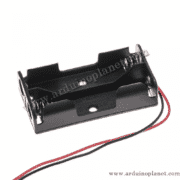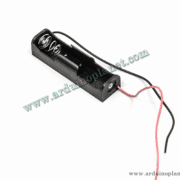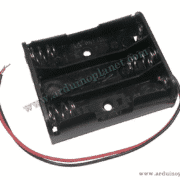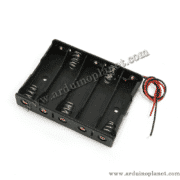
Description
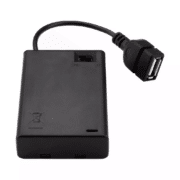
🔋 4×AA Battery Holder in Series — 6 V or 4.8 V Output
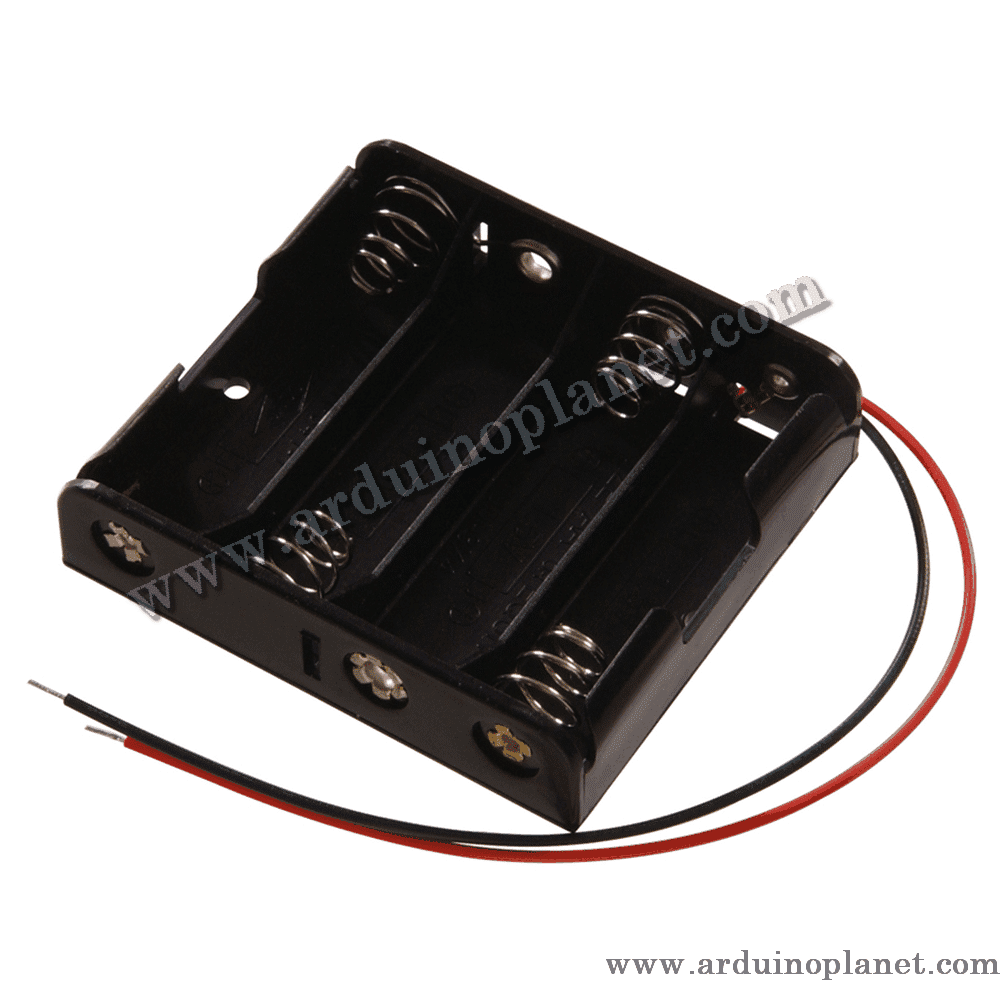
This holder for four AA batteries provides portable power for electronic projects, small motors, lighting and equipment operating around 5 or 6 V.
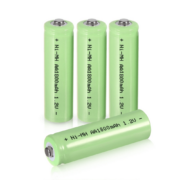
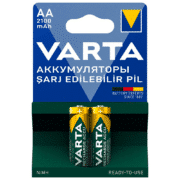
The four slots are connected in series. The holder therefore supplies 6 V with four 1.5 V alkaline cells, or 4.8 V with four rechargeable 1.2 V NiMH cells.
✨ Features
- Holds four AA batteries or rechargeable cells
- Internal series connection
- 6 V output with alkaline cells
- 4.8 V output with NiMH cells
- Cells can be removed easily
- No need to solder directly to the batteries
- Suitable for electronic and robotics projects
- Simple to fit inside an enclosure
- Practical for autonomous prototypes
🔧 Main specifications
- Type: holder for cylindrical batteries
- Compatible size: AA
- Number of slots: 4
- Configuration: 4S
- Electrical connection: series
- Voltage with alkaline cells: 1.5 V × 4 = 6 V
- Voltage with NiMH cells: 1.2 V × 4 = 4.8 V
- Output: positive and negative
- Built-in charging: no
- Voltage regulation: none
- Batteries included: no
Output voltage varies with the cells’ state of charge and the device’s current draw.
⚙️ How the series connection works
Series wiring adds the voltage of all four cells, but it does not add their capacity.
4 piles alcalines :
1,5 V + 1,5 V + 1,5 V + 1,5 V = 6 V

4 accus Ni-MH :
1,2 V + 1,2 V + 1,2 V + 1,2 V = 4,8 V
With four 2,500 mAh cells, the pack supplies about 4.8 V and 2,500 mAh, not 10,000 mAh.
📊 Choosing a battery type
| Battery type | Pack voltage | Rechargeable |
|---|---|---|
| 4 AA alkaline cells | 6 V | ❌ No |
| 4 AA NiMH cells | 4.8 V nominal | ✅ Yes, with a suitable charger |
Some circuits advertised for 5 V accept only a limited voltage range. Check that the circuit can tolerate 6 V before using alkaline cells.
🛠️ How to use
- Check the voltage range accepted by your device.
- Choose four matching alkaline cells or four matching NiMH cells.
- Check their condition and voltage.
- Insert each cell according to the + and − markings.
- Measure the total voltage at the holder output.
- Connect the positive output to circuit VCC.
- Connect the negative output to GND.
- Add a switch and fuse when the application requires them.
🔌 Wiring example
Porte-piles + ─── Fusible ─── Interrupteur ─── VCC
Porte-piles – ──────────────────────────────── GND
To power a circuit that requires exactly 5 V, use a converter or regulator suited to the available input voltage.
⚠️ Precautions
- Use four cells of the same chemistry.
- Do not mix alkaline and NiMH cells.
- Do not combine new and used cells.
- Check that all four cells have a similar state of charge.
- Never recharge alkaline cells.
- Recharge NiMH cells with a charger designed for that chemistry.
- Observe the polarity in every slot.
- Never short-circuit the output.
- Check that the device tolerates the pack’s maximum voltage.
- Remove the cells before changing the wiring.
- Also remove them for long-term storage.
🎯 Applications
- Robots and electronic vehicles
- Small DC motors
- Compatible lighting and LED strips
- Portable audio amplifiers
- Electronic prototypes
- Measuring instruments
- Alarms and security systems
- School and educational projects
- Sensors and autonomous equipment
- Battery-powered toys and mechanisms
Keywords: holder, battery.