Description
ATMEL AVR USB ISP Programmer
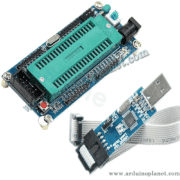
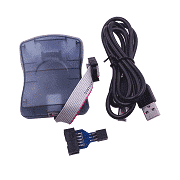
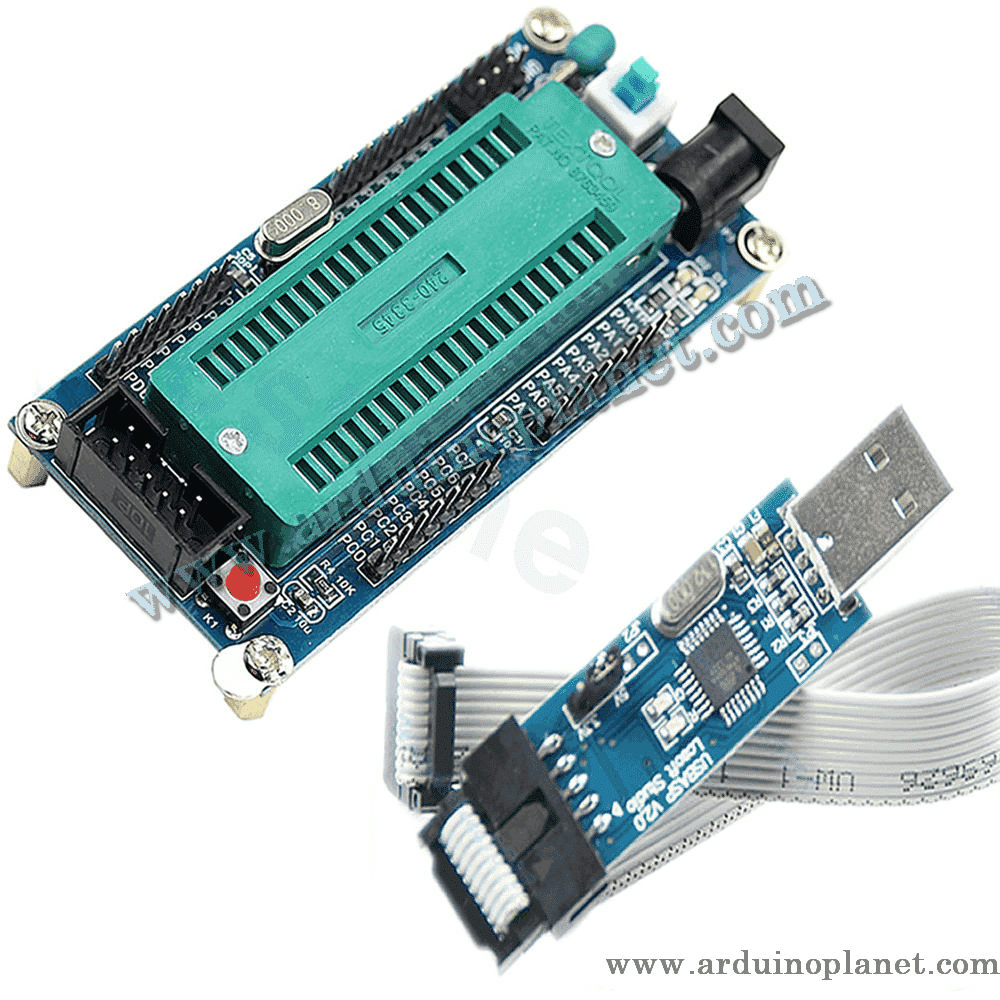
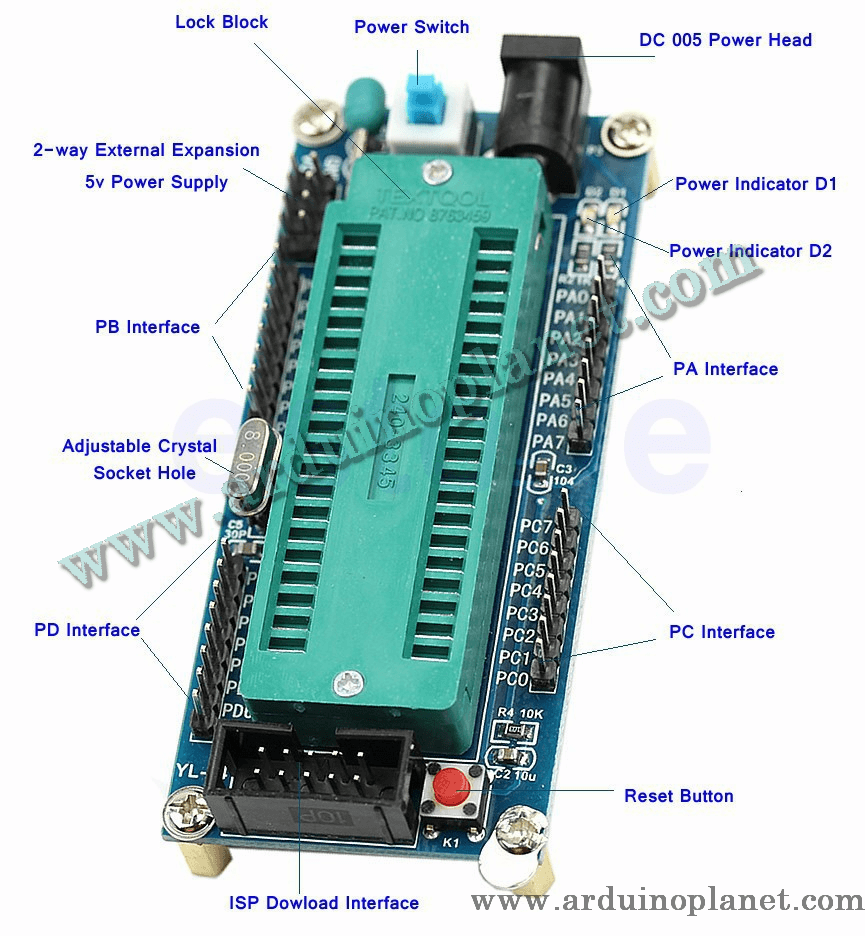
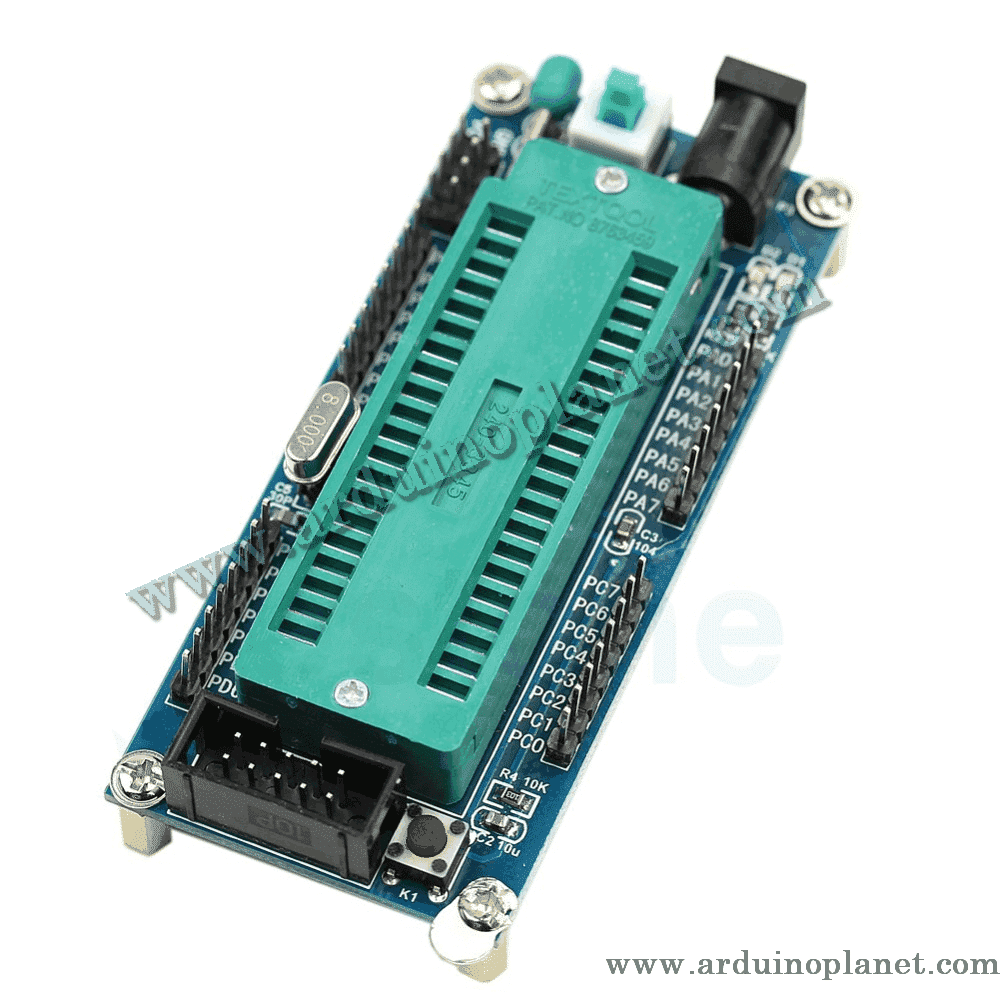
USB ISP Programmer for Atmel AVR manufactured by LCSoft Studio and equipped with a system board to facilitate the programming of several types of microcontrollers. Its design is based on Thomas Fischl’s USBasp – ensuring support for many tools, particularly avrdude.
The USB interface is implemented using an ATmega processor, with the rest handled in the firmware. This USB programmer allows you to:
- Read or write the microcontroller EEPROM, firmware, fuse bits, and lock bits
- Support for Linux, OS X, and Windows (works on Vista)
- 5 KB/s maximum write speed
- Software-controlled SCK option to support low clock speed targets (< 1.5 MHz)
- 10-pin ISP interface
supported microcontrollers include:
- Mega Series
- ATmega8 ATmega48 ATmega88 ATmega168 ATmega328
- ATmega103 ATmega128 ATmega1280 ATmega1281 ATmega16
- ATmega161 ATmega162 ATmega163 ATmega164 ATmega169
- ATmega2560 ATmega2561 ATmega32 ATmega324 ATmega329
- ATmega3290 ATmega64 ATmega640 ATmega644 ATmega649
- ATmega6490 ATmega8515 ATmega8535
- Tiny Series
- ATtiny12 ATtiny13 ATtiny15 ATtiny25 ATtiny26
- ATtiny45 ATtiny85 ATtiny2313
- Classic Series
- AT90S1200 AT90S2313 AT90S2333 AT90S2343 AT90S4414
- AT90S4433 AT90S4434 AT90S8515
- AT90S8535
- CAN Series
- AT90CAN128
- PWM Series
- AT90PWM2 AT90PWM3
ISP Interface Pinout
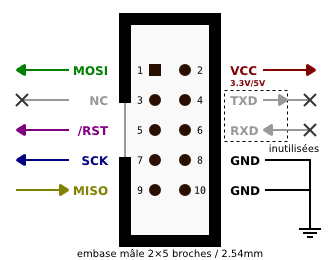
USBasp LCSoft Studio ISP header pinout — This diagram describes the pinout of the programmer’s male header; i.e., the socket soldered onto the programmer.
Note that pins 3, 4, and 6 should not be connected to the target in programming mode.
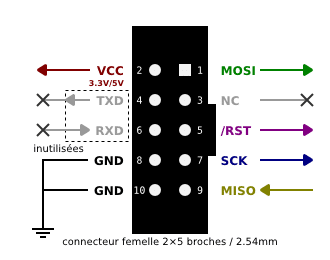
USBasp LCSoft Studio ISP plug pinout — This diagram describes the pinout of the programmer’s female plug; i.e., each of the plugs attached to the ends of the ribbon cable (flat cable) connecting the programmer to the target.
Note that pins 3, 4, and 6 should not be connected to the target in programming mode.
Keywords: maxim, flash, programmer.