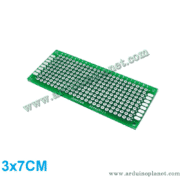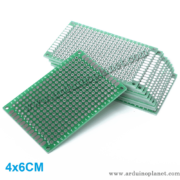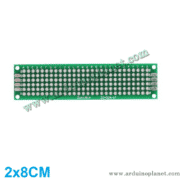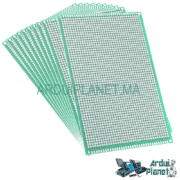
Description
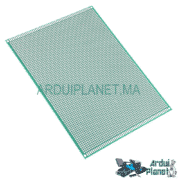
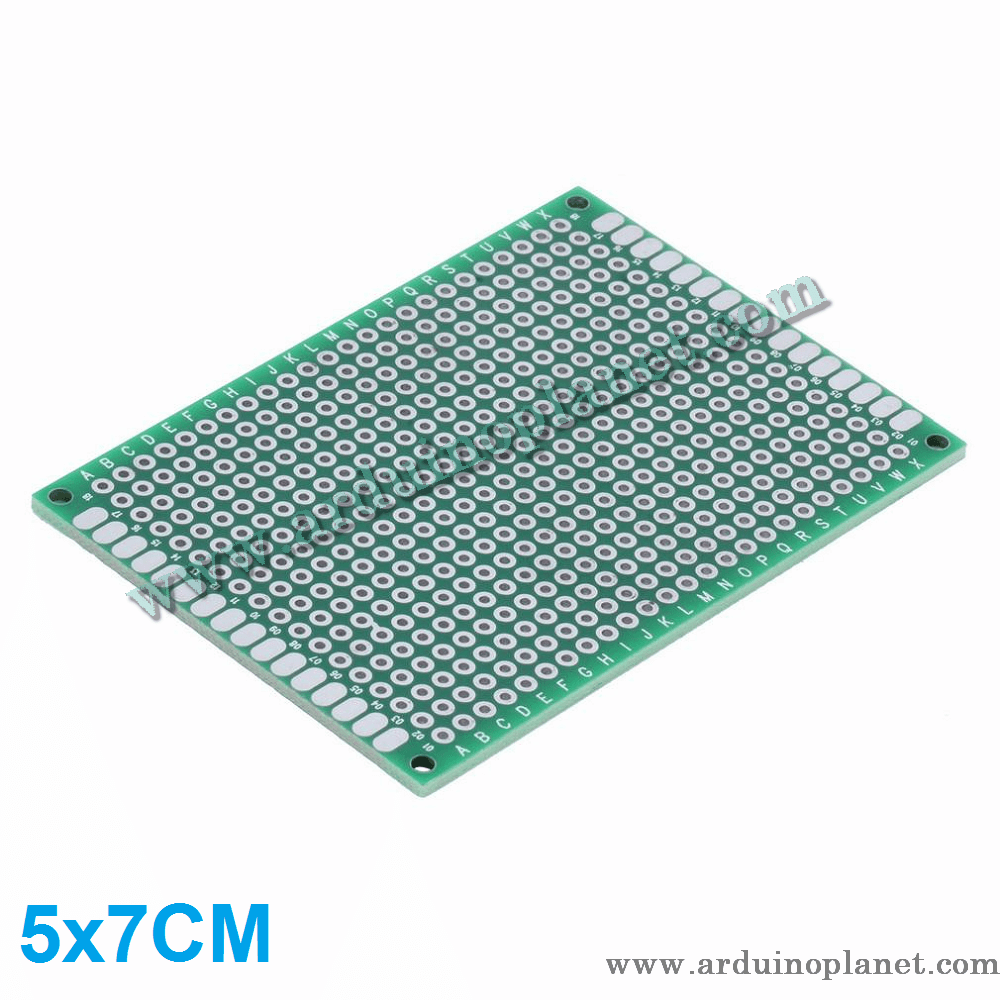
🧩 Double-Sided Perforated PCB, 5 × 7 cm
This compact board is intended for building small, permanent electronic circuits. It can suit sensor, regulator, interface, audio, LED-control and adapter circuits installed in an enclosure. Pads are available on both sides for soldering and routing; no board fabrication or chemical etching is required.
✨ Highlights
- 📏 5 × 7 cm format
- 🔄 Pads on both sides
- 🔩 Pre-drilled holes
- 🧩 For through-hole components
- 📦 Suitable for fitting into an enclosure
- 🔧 For permanent soldered assemblies
- 🛠️ No etching chemicals required
- 🎓 Suitable for beginners
- 💰 Economical for small projects
🔧 Specifications
- Type: universal perforated PCB
- Construction: double-sided
- Dimensions: 5 × 7 cm
- Mounting: through-hole components
- Connections: solder and jumper wires
- Soldering: possible on both sides
- Cutting: can be cut to a smaller size if needed
- Components included: none
Verify the hole pitch and whether the holes are internally plated directly on the board.
🛠️ Assembly guide
- Test the circuit on a breadboard first.
- Plan the component layout; place the largest parts first.
- Position resistors, diodes and capacitors, leaving an edge for connectors.
- Solder one lead of each component, adjust alignment, then complete the joints.
- Connect pads with solid or insulated wire; use the second side for crossing connections.
- Check continuity with a multimeter and check for shorts before applying power.
- Clean off flux residue.
💡 Layout tips
Entrée       Circuit principal       Sortie
  │                 │                   │
Connecteur → Composants actifs → Connecteur
VCC et GND- Place capacitors close to integrated circuits and keep connections short.
- Use red wire for VCC and black wire for GND.
- Label connectors and add test points where possible.
⚠️ Tips and precautions
- The top and bottom pads may not be electrically connected.
- Do not hold the soldering iron on a pad for too long.
- Avoid solder bridges between adjacent holes.
- Disconnect power before making changes.
- Wear eye protection when trimming component leads and work in a ventilated area.
- Do not place a powered circuit on a conductive surface.
- Do not use this board directly on mains voltage without required insulation distances and protection.
🎯 Typical applications
- 📡 Sensor modules
- 💡 LED controls
- 🔊 Small audio circuits
- ⚡ Regulators and power supplies
- 🔔 Alarms and buzzers
- 🤖 Robotics interfaces
- 🧪 Laboratory adapters
- 🎓 Educational projects
- 🛠️ Electronics repairs
- 📦 Compact circuits in enclosures