Description
PCF8591 ADC/DAC I²C Module
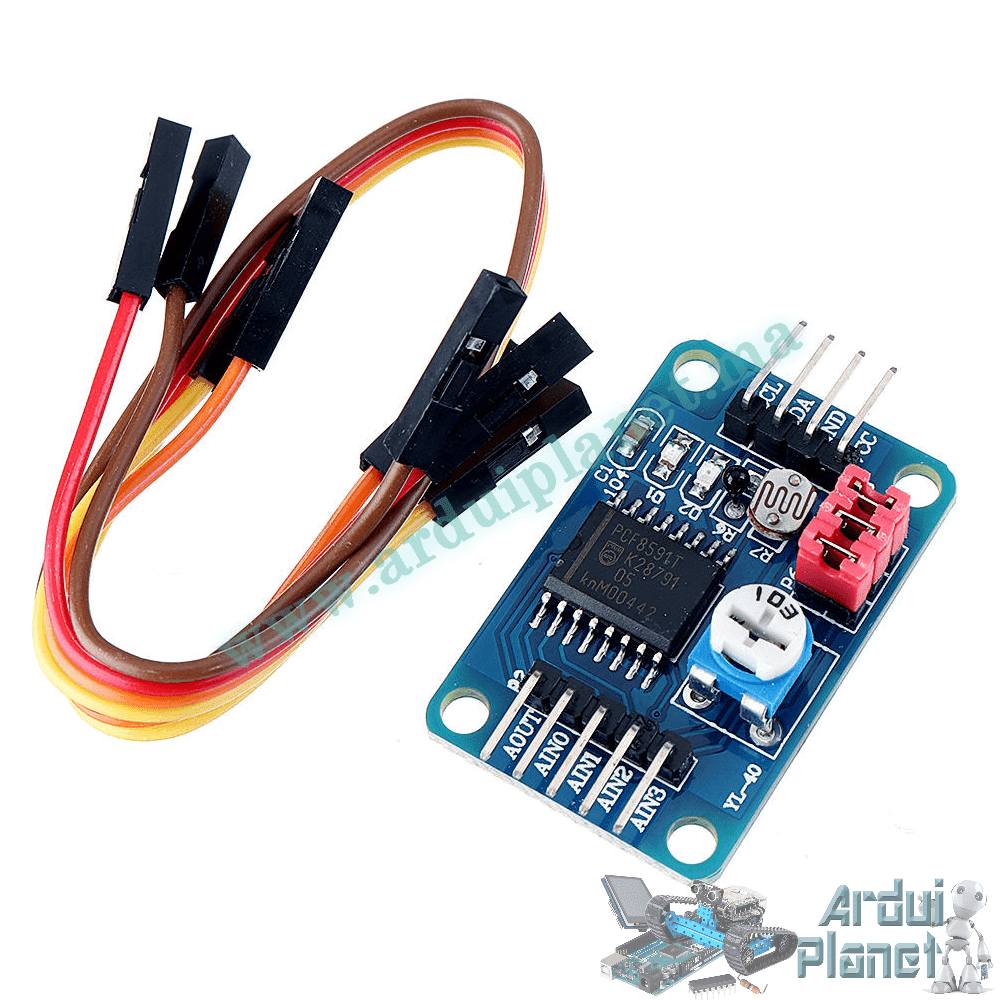
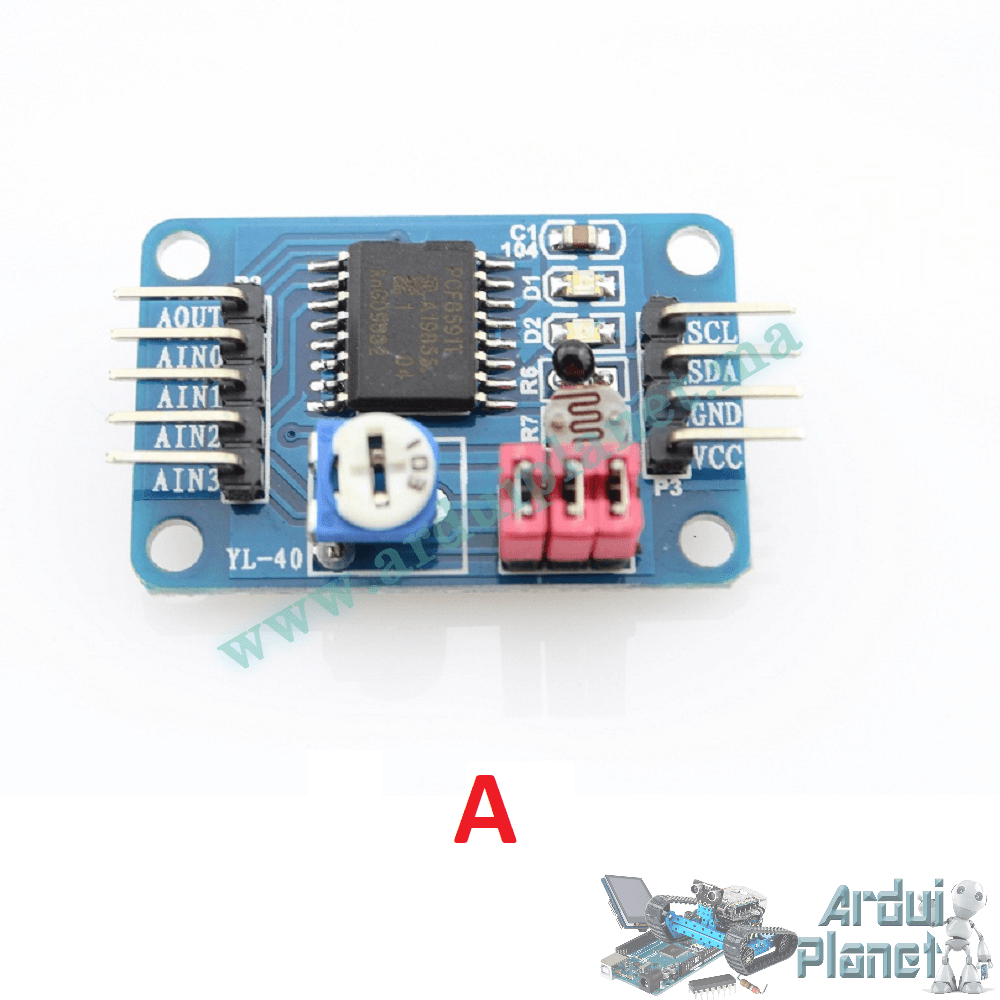
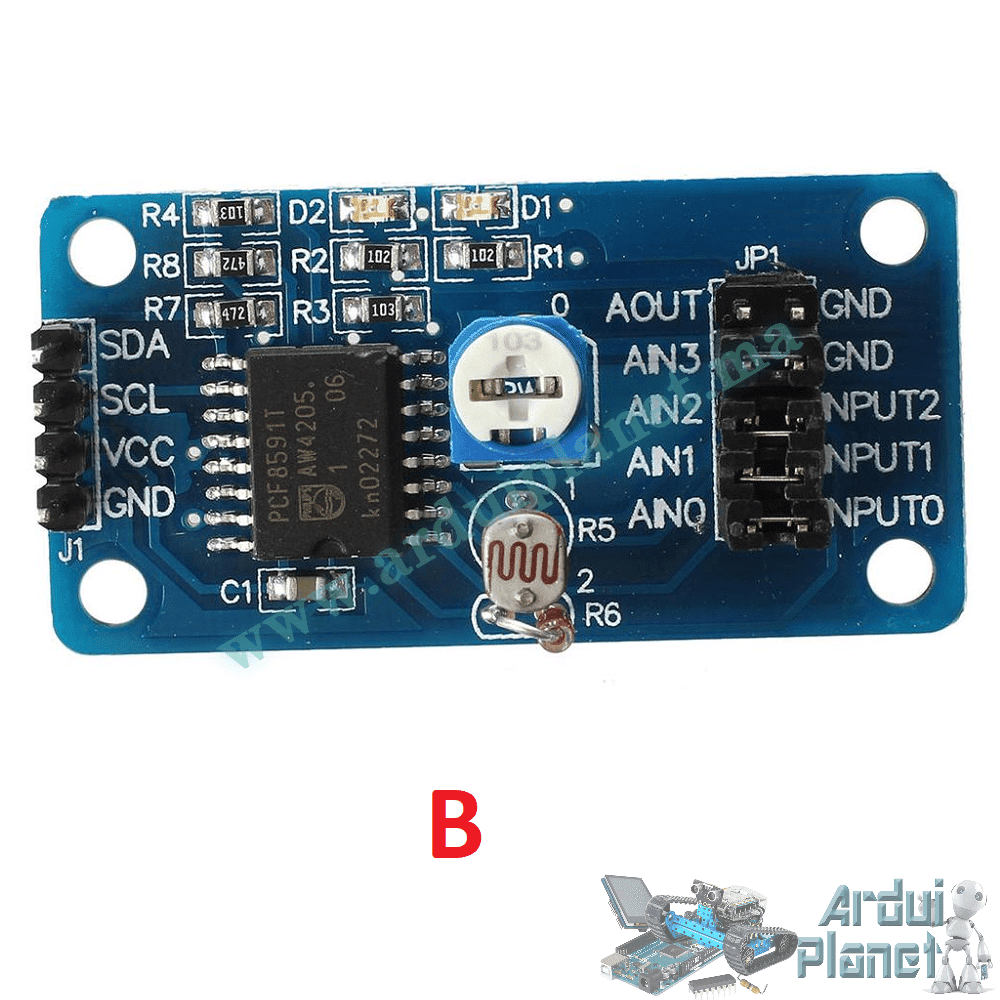
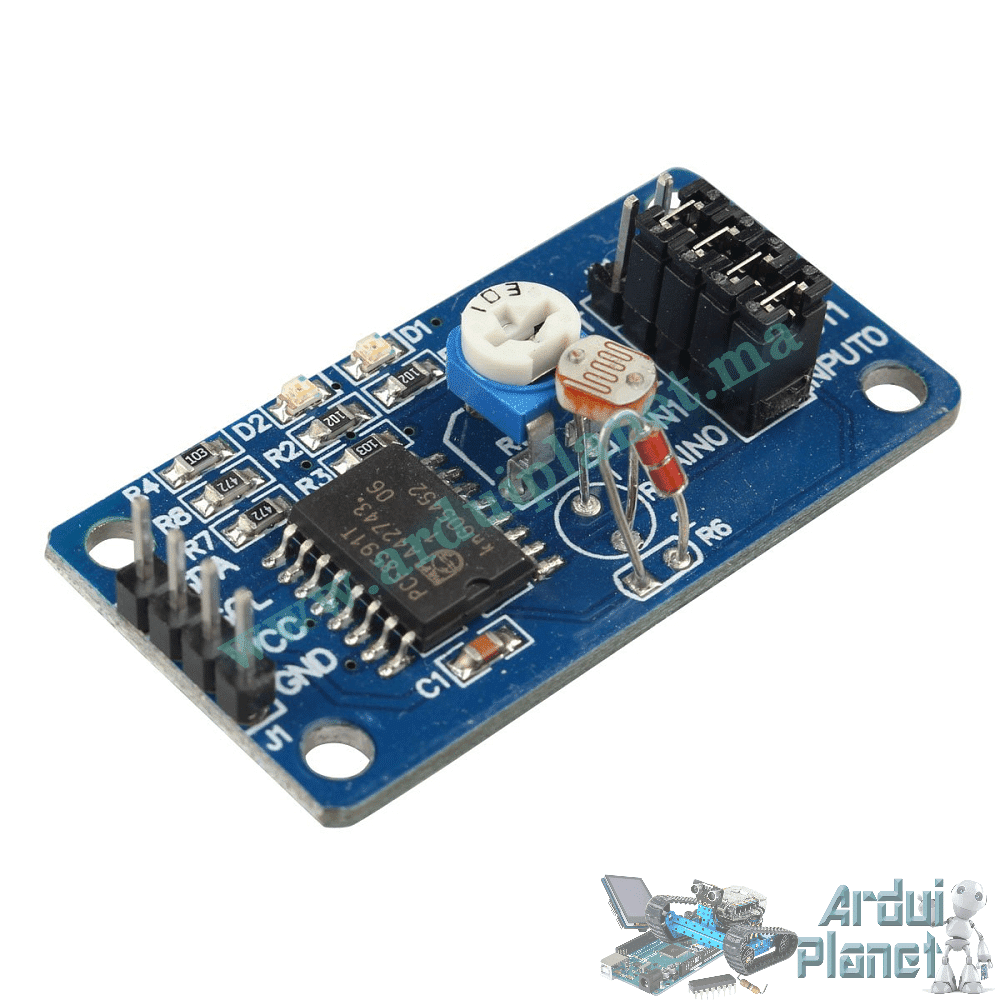
This module is a reference and learning board built around the PCF8591, an 8-bit analog-to-digital and digital-to-analog converter. It provides four analog inputs, one analog output, and onboard light-dependent resistor (LDR), thermistor and potentiometer sensors. The listing offers board revisions A and B.
- Four-channel, 8-bit ADC
- One-channel, 8-bit DAC
- Onboard LDR, thermistor and potentiometer
- I²C interface
- Module described as compatible with 3.3 V and 5 V logic; verify I²C line levels with your controller
PCF8591 and module specifications
- IC operating supply: 2.5–6.0 V according to NXP. The source gives 2.7–6 V in one place and 2.5–6 V for the module header.
- DAC output without load: 0 V to VCC (source-listed)
- DAC output with 10 kΩ load: 0 V to 0.9 × VCC (source-listed)
- PCB dimensions: 35 × 23 mm
DAC analog output
The DAC output is available at AOUT and has 256 output steps. At a 5 V supply, one nominal step is 5 V ÷ 256, approximately 20 mV. The board connects an LED and 1 kΩ resistor to the DAC output; this load limits the output swing. The source estimates a maximum of about 4.2 V at VCC = 5 V. For a larger output swing, the source recommends removing the LED load. The DAC is also used internally during ADC operation; an internal track-and-hold circuit maintains the output value.
ADC analog inputs
Inputs AIN0–AIN3 are available at the header. They operate as four single-ended, ground-referenced inputs by default. The PCF8591 also supports two differential inputs; consult the datasheet for that configuration.
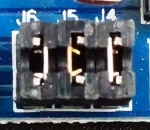
Three onboard jumpers connect the sensors to input channels. Remove the relevant jumper to use that channel as a general-purpose input:
- J5: LDR to channel 0 (
AIN0) - J4: thermistor to channel 1 (
AIN1) - J6: potentiometer wiper to channel 3 (
AIN3) - Channel 2 (
AIN2) has no onboard sensor connection and needs no jumper adjustment.
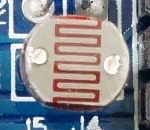
LDR
The LDR responds to changes in light. Less light increases the voltage read on channel 0. Readings are relative and are not calibrated absolute light-intensity measurements.
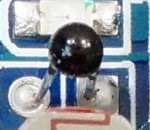
Thermistor
The thermistor resistance changes with temperature. A temperature decrease raises the voltage on channel 1, according to the source. Its exact specification is not provided, so use it for relative temperature changes unless you characterize and calibrate it empirically.
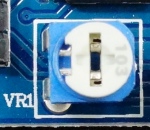
Potentiometer
The onboard 10 kΩ potentiometer is connected between VCC and GND, with its wiper connected to channel 3. Turning it varies the channel-3 voltage between 0 V and VCC; clockwise rotation lowers the voltage, according to the source. It can be used as a general-purpose analog control input.
I²C interface
- I²C address:
0x48. The source says all three IC address pins are tied to ground on this module, so the address cannot be changed. - Two 10 kΩ pull-up resistors are fitted to SCL and SDA.
If the module is powered at 5 V, verify that the I²C pull-up voltage is safe for the connected controller; use suitable level shifting where required. Confirm analog input range and output levels before connecting other equipment.
Connections
Connect VCC and GND to a suitable supply and the microcontroller. Connect I²C SCL and SDA to the matching bus lines.
1 × 4 I²C header
- SCL: I²C clock
- SDA: I²C data
- GND: ground
- VCC: supply, listed as 2.5–6 V
1 × 5 analog header
- AOUT: DAC analog output
- AIN0: ADC input channel 0
- AIN1: ADC input channel 1
- AIN2: ADC input channel 2
- AIN3: ADC input channel 3
NXP lists the PCF8591 IC as discontinued; specifications remain available in its datasheet. Verify the fitted chip and board revision.
NXP PCF8591 product information · Official PCF8591 datasheet