Description
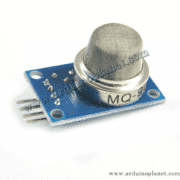
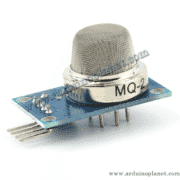
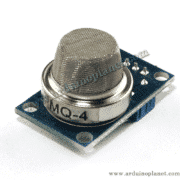
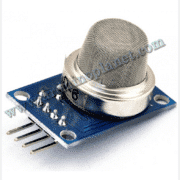
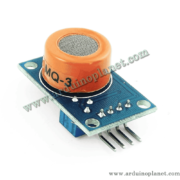
MQ-7 Carbon Monoxide Sensor Module
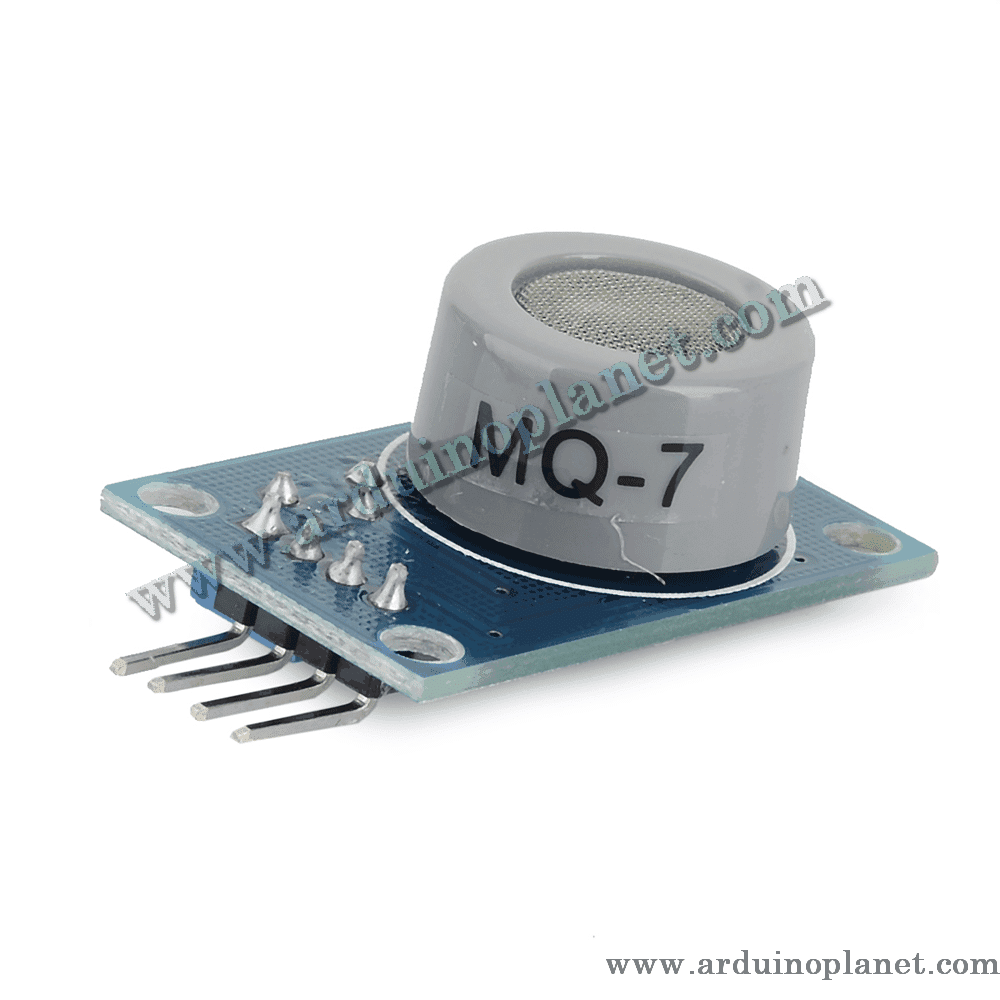
This module is listed as an MQ-7 carbon-monoxide (CO) gas sensor. Semiconductor sensors change their electrical response when exposed to CO, but their readings depend on the exact sensor, heater cycle, calibration and surrounding conditions.
🔧 Sensor reference information
- Sensor family: MQ-7 semiconductor gas sensor
- Target gas: carbon monoxide (CO)
- MQ-7B manufacturer reference range: 10–500 ppm CO under specified test conditions; verify the exact sensor version
- Adjustable sensitivity: may be available on the supplied module; check the board
- Signal indicator: may be available depending on board version
Critical heater-cycle note: the manufacturer’s MQ-7B reference uses a two-temperature cycle: approximately 5.0 V for 60 seconds, followed by 1.5 V for 90 seconds. The low-temperature phase is used for CO detection; the high-temperature phase helps clean the sensing surface. A board that supplies the heater continuously at 5 V may not implement this measurement cycle correctly. Confirm the exact module circuitry and follow its documentation before use.
⚙️ Measurement and calibration
Allow the sensor to preheat and stabilize as specified by its manufacturer, then calibrate the complete circuit using appropriate known conditions. Temperature, humidity, other gases, sensor ageing and heater timing can affect the result. The module output is not automatically a calibrated ppm reading, and the product listing does not identify a certified calibration or alarm standard.
🔌 Board and microcontroller notes
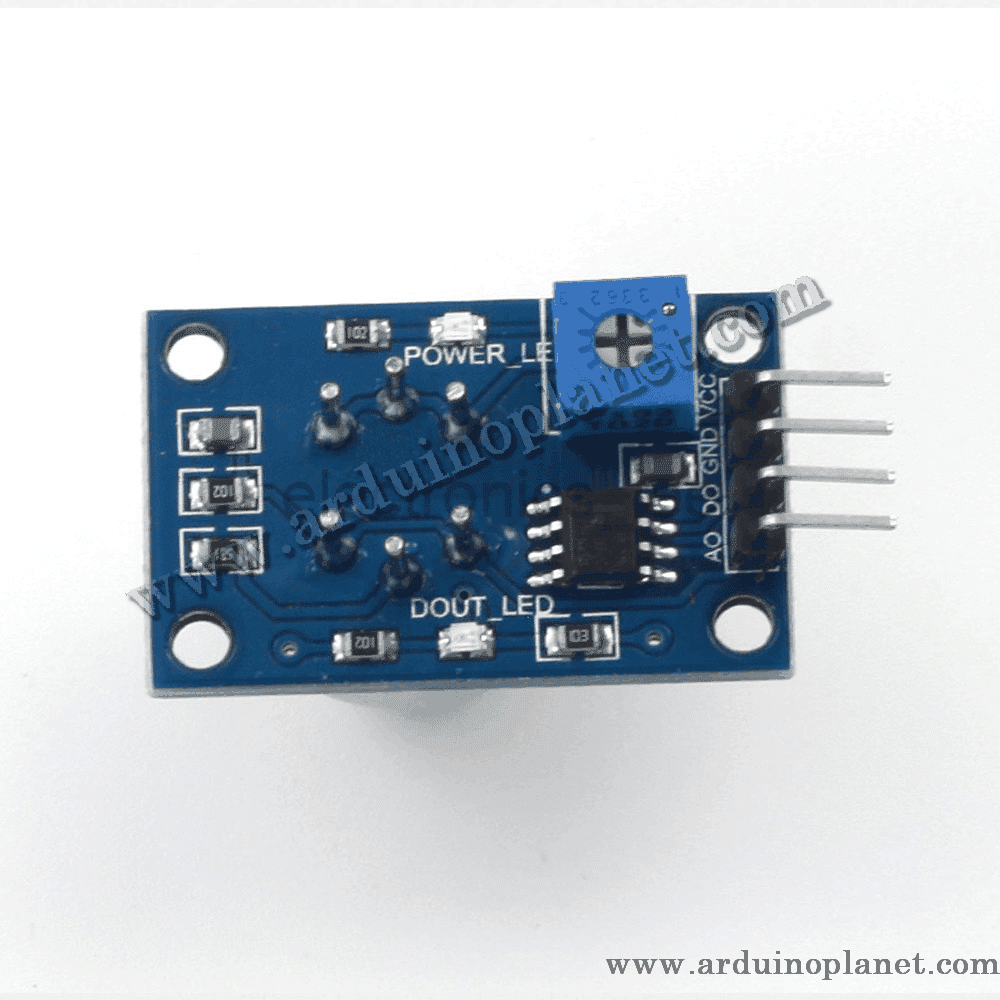
Pinout varies; follow the supplied board’s labels. Some boards expose analog output (AO), a comparator-based digital output (DO), VCC and GND. Check whether heater-cycle switching is built in, what supply each pin requires, and the maximum AO/DO voltage. Protect 3.3 V-only microcontroller inputs from 5 V signals.
Carbon-monoxide safety: CO is a poisonous, odorless gas. This hobby module is not a certified household CO alarm, industrial monitor or life-safety device. Never rely on it to protect people, detect an emergency or replace an approved alarm. Install certified CO alarms and follow local safety guidance. Do not generate or release CO for testing.