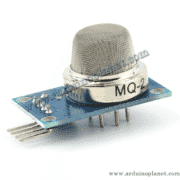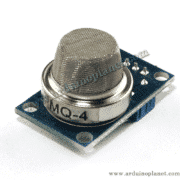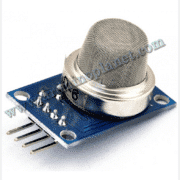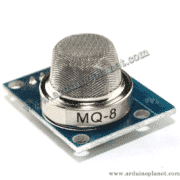
Description
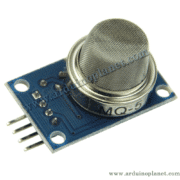
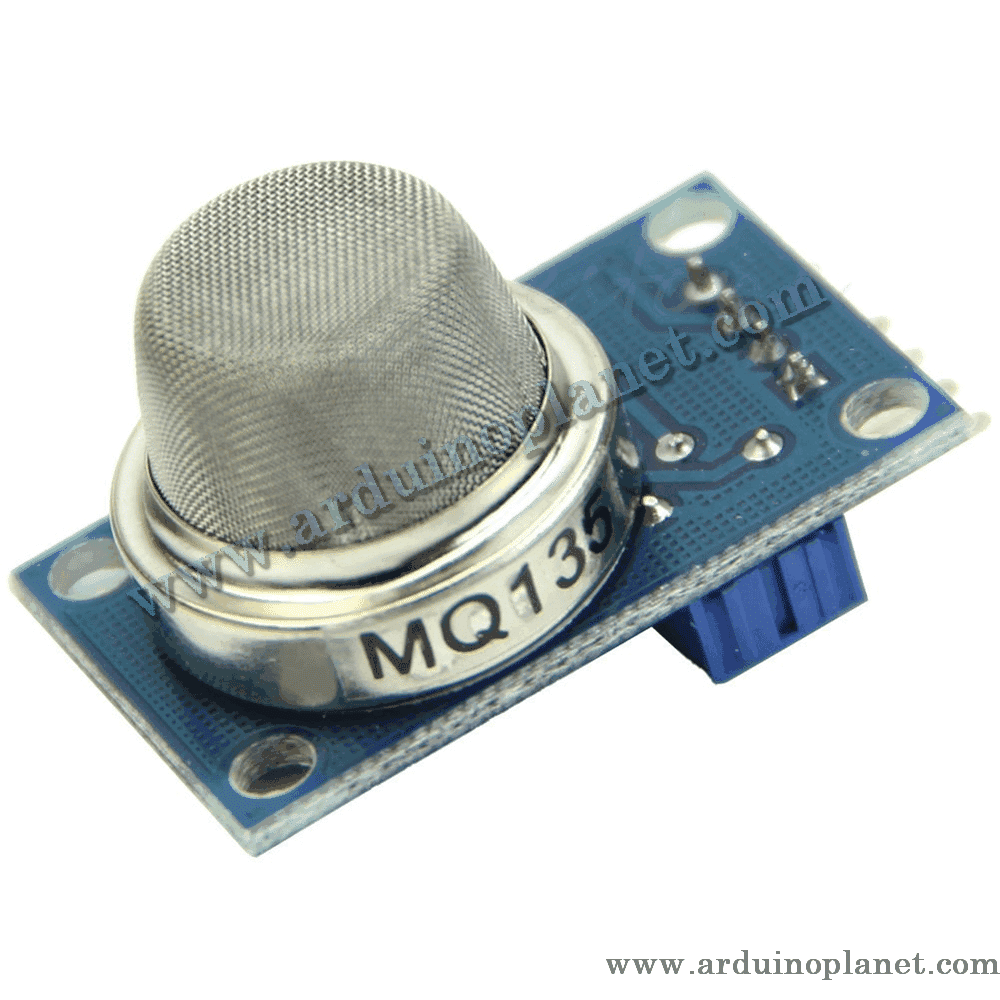
MQ135 Air-Quality Gas Sensor Module
This module uses an MQ135 tin-dioxide (SnO₂) semiconductor gas sensor. Its resistance changes in response to certain gases and vapours. It is suitable for demonstrations and experimental trend monitoring after warm-up and calibration, but it is not a selective analyzer of individual pollutants.
🔧 Manufacturer reference information
- Sensor type: semiconductor (SnO₂)
- Manufacturer-listed sensitivities include ammonia, sulfide and benzene-series vapours, as well as smoke and other gases
- Manufacturer-stated test range: 10–1,000 ppm for specified gases such as ammonia, toluene, hydrogen and smoke under stated test conditions
- Heater and circuit supply: 5.0 V nominal in the manufacturer’s standard test circuit
- Heater consumption: up to approximately 950 mW
- Initial preheating: over 48 hours in the manufacturer’s reference conditions
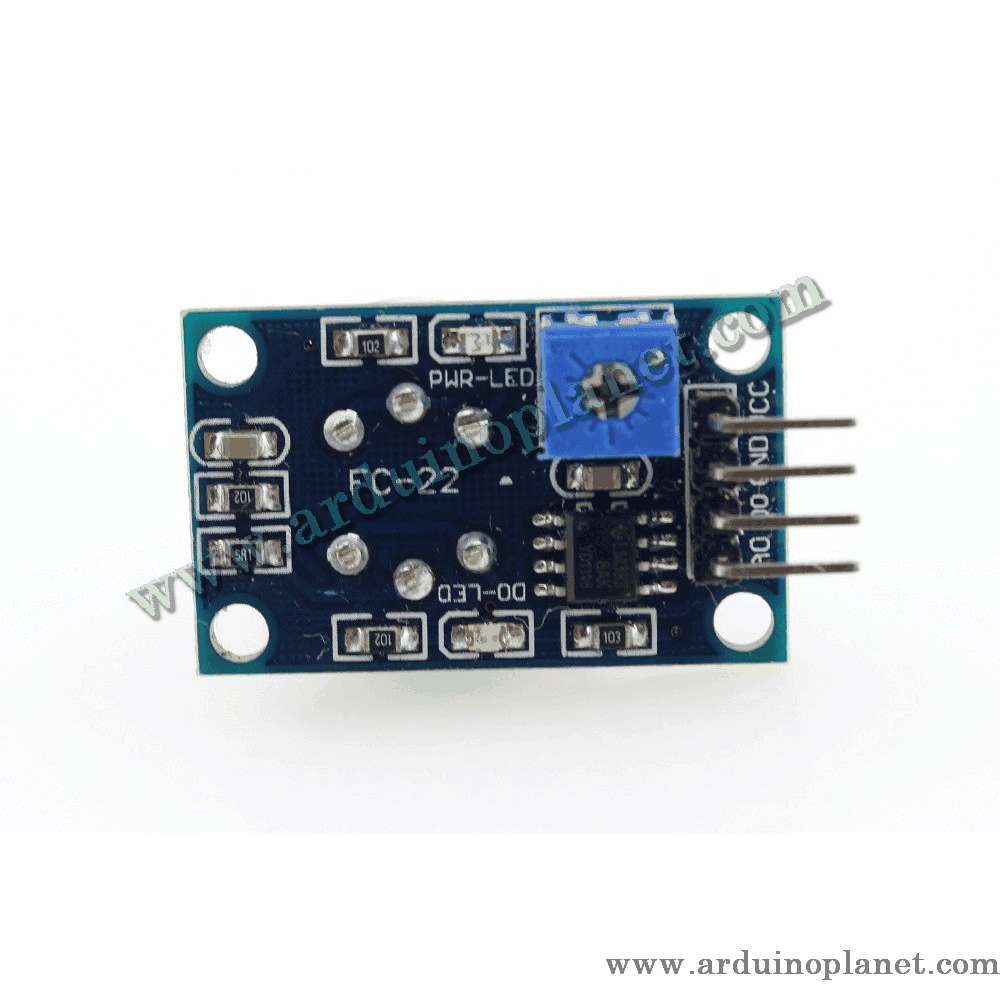
- The module may include an adjustable threshold potentiometer and signal indicator; verify the supplied board
CO₂ limitation: the source listing names CO₂, but the MQ135 manufacturer’s documented target/test-gas list does not establish it as a calibrated CO₂ meter. This is not an NDIR CO₂ sensor. Do not use its raw output to report dependable CO₂ ppm or assess ventilation without a validated gas-specific calibration and measurement method.
⚙️ Reading and calibration
The output changes with gas exposure, but also with humidity, temperature, airflow, sensor ageing, heater voltage and other vapours. A potentiometer on a common breakout normally sets a comparator threshold; it does not calibrate gas concentration. Allow the sensor to preheat, then calibrate the complete circuit in controlled conditions. Use the datasheet’s circuit guidance for the sensing voltage, heater voltage and load resistor.
🔌 Typical breakout connections
Pin order and outputs vary by board; common versions provide VCC, GND, analog output (AO) and comparator-based digital output (DO). The heater requires a suitable stable 5 V supply and can draw substantial current; do not power it from a microcontroller GPIO. Confirm AO/DO voltage before connecting to 3.3 V-only inputs and use appropriate level shifting or protection.
💡 Suitable prototype uses
- Educational demonstrations of broad semiconductor-sensor response
- Relative trend experiments in a supervised environment
- Microcontroller analog-input and comparator exercises
Safety and measurement notice: this hobby module is not a certified air-quality instrument, CO₂ meter, toxic-gas monitor, fire detector or life-safety alarm. It cannot reliably identify which gas caused a reading. Do not use it to make health, occupancy, ventilation or emergency decisions, or as a replacement for certified alarms and calibrated instruments. Do not expose yourself to hazardous gases while testing.